
A Parent's Guide to Player Development, Team Selection, High School Preparation, and Long-Term Success
At Marin Baseball, we believe parents deserve honest information about youth baseball.
Choosing the right club, understanding player development, navigating tryouts, balancing workloads, and preparing for high school baseball can be overwhelming. Every organization claims to develop players, but few take the time to explain what development actually looks like.
This resource was created to help families understand the youth baseball journey, what matters at each stage, and how to make decisions that support long-term growth.
Our mission is simple:
Develop confident, healthy, fundamentally sound players who are prepared for high school baseball and beyond.
DEVELOPMENT OVER RESULTS
Winning is fun.
Competing matters.
Learning how to handle success and adversity is an important part of sports.
But winning at 10 years old, 12 years old, or even 13 years old does not predict future success.
Many future high school starters were average youth players.
Many dominant youth players never continue developing.
The players who ultimately succeed are often the players who continue improving year after year.
A player's current ability does not determine future potential.
Development is rarely linear.
Players grow physically, mentally, emotionally, and athletically at different rates.
Our goal is not to build the best youth team.
Our goal is to help players become the best version of themselves by the time they reach high school.
WHAT DEVELOPMENT SHOULD LOOK LIKE AT EACH AGE

-
Focus on:
Learning to throw and catch consistently
Proper throwing mechanics
Athletic movement
Hitting fundamentals
Confidence and enjoyment
The most important skill at this age is often the simplest:
Can your player consistently play catch?
A strong throwing and catching foundation impacts every aspect of future baseball development.
-
Players should develop:
Baseball IQ
Situational awareness
Defensive responsibilities
Base running skills
Team concepts
Players should continue learning multiple positions and developing athletic versatility.
-
Players should begin developing:
Arm strength
Throwing endurance
Pitching mechanics
Advanced defensive skills
Mental toughness
This is often when physical development begins separating players. Coaches must evaluate both current performance and future potential.
-
Middle school is one of the most important developmental periods.
Players should begin preparing for:
Full-sized fields
Longer throws
Bigger basepaths
Faster game speed
Increased pitching demands
This is why Marin Baseball emphasizes opportunities to train and compete on high school-sized fields whenever possible.
The game changes significantly as players approach high school.
Preparation matters.
THE BORING THINGS MATTER
The players who continue advancing through the game often share common habits.
They consistently do the little things well · The fundamentals may not be flashy · But they are often the difference makers.

Great players:
Play catch regularly
Have a consistent tee routine
Arrive prepared
Practice with purpose
Listen and make adjustments
Compete every day
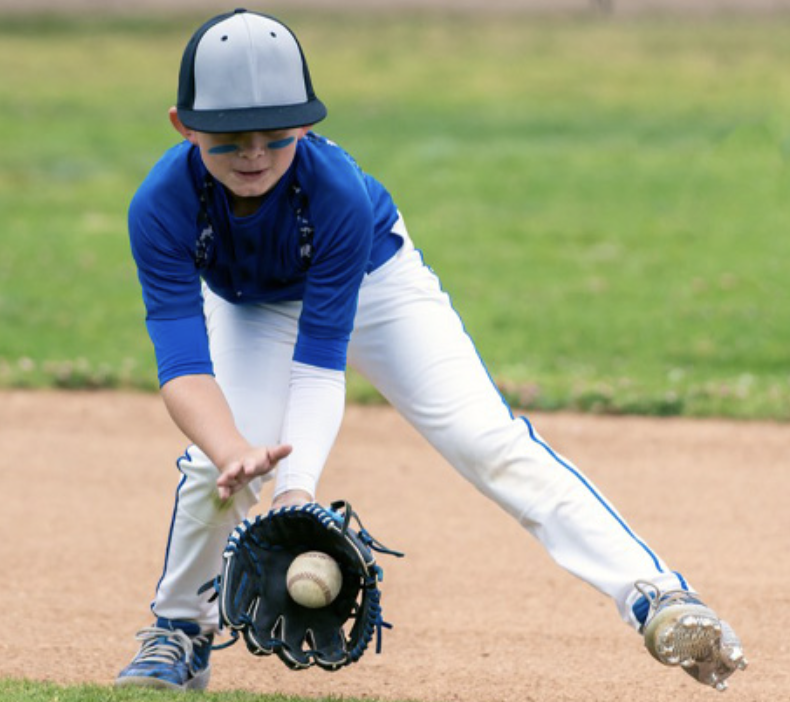
Great infielders:
Take a prep step every pitch
Stay low and athletic
Anticipate the next play
Move before the ball is hit
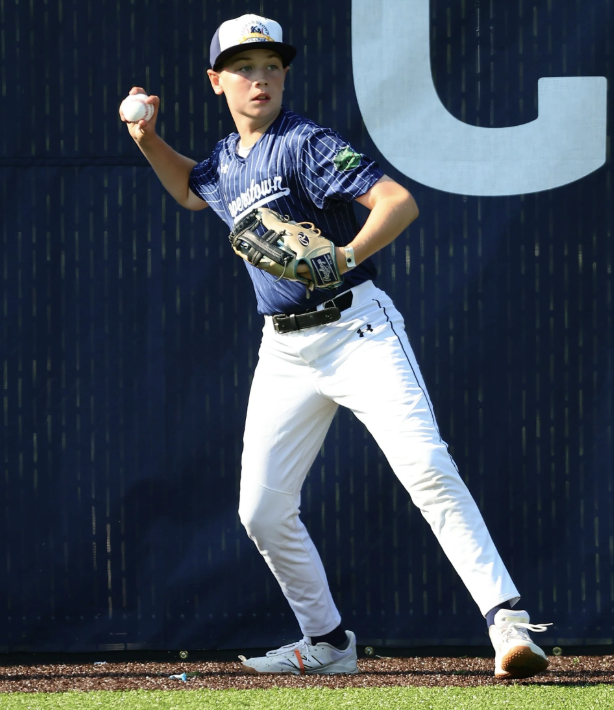
Great outfielders:
Read swings
Take quality first steps
Communicate constantly
Stay engaged every pitch

MULTI-SPORT ATHLETES & FLEXIBLE DEVELOPMENT PATHWAYS
At Marin Baseball, we strongly support well-rounded athletes and understand that many players participate in other sports, activities, and family commitments throughout the year.
We believe athletic development happens in many ways, and exposure to different competitive environments can help athletes develop coordination, confidence, leadership, mental toughness, and overall athleticism.
We also recognize that every family has different goals, schedules, and priorities. Not every player wants or needs a year-round baseball commitment, and we believe players should have opportunities to continue developing while maintaining balance in their lives.
That's why we offer multiple pathways for players and families to remain connected to baseball while maintaining flexibility in their schedules.
Depending on age and team needs, opportunities may include:
Participating during specific seasons rather than year-round
Practice Player opportunities
Academy programs
Academy League participation
Weekend-only participation options when appropriate
Finding the Right Balance
One of the most important decisions families make is determining the right balance between competition, development, family time, academics, and other activities.
We encourage families to choose a baseball pathway that supports long-term growth and enjoyment of the game rather than simply maximizing games played or commitments made.
We believe there is no single path to becoming a successful baseball player.
The best path is the one that keeps a player healthy, motivated, challenged, and excited to continue developing.
Our goal is simple:
Provide players with development opportunities that fit their individual needs while helping them continue progressing toward their long-term goals.
-
A Practice Player participates in team practices and developmental activities without the full commitment of a traditional roster spot. This option allows players to continue developing their skills, remain connected to the team environment, and receive coaching instruction while balancing other sports or commitments.
Practice Player opportunities vary by age group and roster needs, but they can be an excellent option for families seeking flexibility while continuing their baseball development.
-
Not every player follows the same path.
Some players choose to focus on baseball year-round. Others balance baseball with additional sports, family activities, or academic commitments.
Programs such as our Academy and Academy League provide additional flexibility by allowing players to participate in development-focused training and competition without the commitment level of a traditional travel team.
For some families, this means attending training sessions when their schedule allows. For others, it may mean participating during one season while focusing on another sport during a different time of year. These flexible options allow players to continue developing their skills without feeling forced into a one-size-fits-all approach.

THE IMPORTANCE OF ARM CARE
Nothing is more important than a player's health.
No tournament.
No championship.
No game.
Arm health must always come first.
Young athletes are still growing and developing.
Pitch counts, recovery periods, throwing volume, and communication matter.
At Marin Baseball we believe:
Arm health comes before wins
Pitch counts matter
Recovery matters
Rest matters
Communication matters
We encourage ongoing communication between families, Little League coaches, school coaches, and Marin Baseball coaches whenever players are pitching for multiple teams.
Protecting young arms is a shared responsibility.
Our goal is not simply to help players throw harder.
Our goal is to help players stay healthy and enjoy the game for years to come.
To further support player health, Marin Baseball is partnering with Dr. Merritt Walker, former trainer to the Arizona Diamondbacks, to develop arm care education and injury prevention programming designed to help families better understand:
Throwing workload management
Recovery strategies
Mobility and flexibility
Strength development
Injury prevention
Long-term arm health
For information on how to personally work with Merritt HERE
WHY PLAYING MULTIPLE POSITIONS MATTERS
One of the most common questions parents ask is:
"What position should my player focus on?"
Our answer:
As many as possible.
Especially at younger ages.
Playing multiple positions helps players:
Become more athletic
Increase baseball IQ
Improve decision making
Develop leadership skills
Understand the game from different perspectives
Versatility remains one of the most valuable skills players can develop.

SUPPORTING LITTLE LEAGUE DURING THE SPRING
Marin Baseball believes Little League continues to play an important role in player development.
Community baseball provides:
Friendships
School connections
Leadership opportunities
Valuable game experience
Our philosophy is simple:
During the Spring season, players should prioritize their Little League commitments.
We intentionally build our schedule to support families by:
Limiting unnecessary conflicts
Scheduling tournaments around traditional non-Little League weekends whenever possible
Communicating with families throughout the season
Respecting community baseball commitments
We view Little League and travel baseball as complementary opportunities that can work together when properly managed.
WHY OFF-SEASON DEVELOPMENT MATTERS
Many of the biggest developmental gains occur outside of the season.
Off-season development allows players to:
Build strength safely
Improve mechanics
Increase arm strength
Develop athleticism
Address opportunities for improvement
What Should Families Look For In Programs?
Look for programs that:
Are age-appropriate
Prioritize fundamentals
Emphasize athletic development
Teach proper throwing progression
Focus on long-term growth rather than quick fixes
The best coaches teach players how to train, not simply what to do.

THE PARENT'S ROLE IN DEVELOPMENT
For players under 14, one of the most important developmental influences is often what happens at home.
Parents do not need to be baseball experts.
They simply need to help create opportunities.
Development can look like:
Playing catch for 10 minutes
Having access to a tee
Encouraging effort instead of outcomes
Supporting recovery and rest
Allowing failure without panic
Helping players build consistency
The goal is not perfection.
The goal is creating an environment where growth can occur.

HOW TO PREPARE FOR TRYOUTS
The best preparation begins long before tryout day.
We recommend:
Playing catch regularly
Taking ground balls and fly balls
Hitting live pitching (as well as a pitching machine)
Developing a tee routine
Improving athletic movement
Getting proper sleep
Most importantly:
Come ready to compete.
Coaches are evaluating much more than results.
We are evaluating effort, preparation, attitude, and coachability.

UNDERSTANDING TEAM SELECTION
Team selection is never based on one throw, one swing, or one great play.
Our coaches evaluate players across multiple categories.
The goal is to place players in the environment where they can develop most effectively, build confidence, receive meaningful opportunities, and prepare for the next stage of their baseball journey.
Team placement is influenced by many factors beyond individual talent alone. Coaches must consider roster balance, player development needs, positional depth, pitching needs, and opportunities for meaningful playing time.
In some cases, a player may be placed on a team where they will receive more defensive opportunities, additional innings on the mound, or greater opportunities to contribute in key roles. Those experiences can be extremely valuable to long-term development.
Position-specific needs are also an important part of roster construction. For example, a player may be an outstanding catcher or pitcher, but if one team already has several players who primarily fill that role while another team has a greater need, coaches must consider what is best for both the player and the overall development of all athletes within the program.
Roster construction is not simply about selecting the most talented players and placing them on one team. It is about creating balanced teams that provide players with opportunities to develop, compete, contribute, and continue growing throughout the season.

Understanding the Value of Being Seen
One reality of baseball that isn't often discussed is that tryouts are only a snapshot.
Coaches work hard to evaluate players fairly, but a single tryout can only provide a limited view of a player's abilities.
Players have good days.
Players have bad days.
Some players thrive in tryout environments.
Others take time to become comfortable and show their true abilities.
For that reason, families who are interested in a particular program should look for opportunities to engage with that organization throughout the year.
This may include:
Clinics
Camps
Skills training
Academy programs
Lessons
Development events
These experiences allow coaches to gain a more complete understanding of a player over time.
Coaches may learn things that cannot always be seen during a tryout, such as:
Athleticism
Work ethic
Coachability
Competitiveness
Consistency
Personality
Ability to make adjustments
Participating in these opportunities does not guarantee team placement.
However, it does provide coaches with additional information that can help them better understand a player's strengths, potential, and developmental needs.
The more opportunities a player has to be seen, the more complete the evaluation becomes.
The goal is not to "get noticed." The goal is to create more opportunities for coaches to see who a player truly is over time.
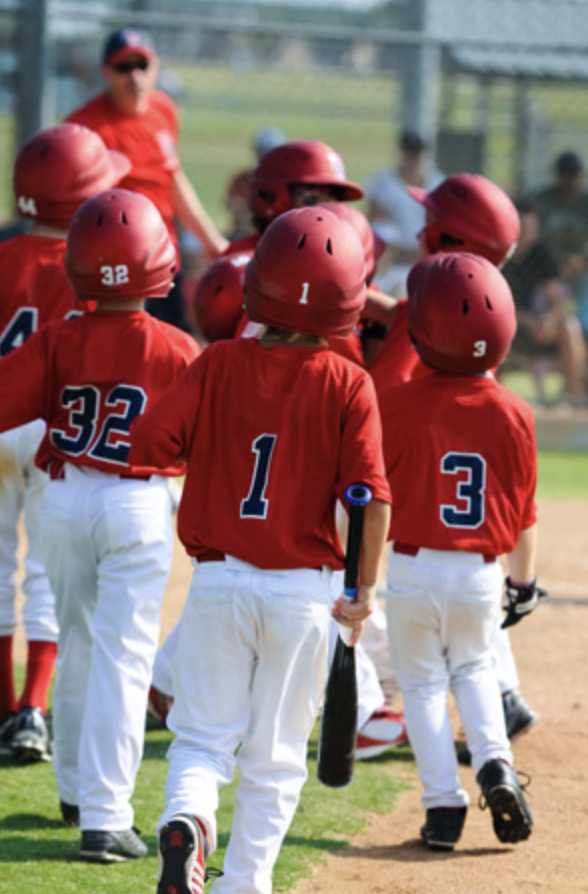
FALL BASEBALL, CLUB MOVEMENT, AND SPRING ROSTERS
Fall baseball serves an important purpose.
It provides opportunities for:
Development
Evaluation
Position experimentation
Skill growth
Additional game experience
Many players also choose to:
Play other sports
Focus on athletic development
Take lessons
Participate in strength training
We support multi-sport athletes and understand that development happens in many ways.
We also understand that families may occasionally explore opportunities with other organizations.
Youth baseball is a journey, and every family must make the decisions they believe are best for their player.
If a player chooses to pursue an opportunity with another club, we encourage them to do so with an open mind, a positive attitude, and a commitment to continued development.
One important thing for families to understand is that no club can guarantee what future opportunities may look like.
Roster needs change.
Players improve.
Teams evolve.
Circumstances change from season to season.
While Marin Baseball will always do its best to support players and families, a decision to leave one organization for another should be viewed as a meaningful decision rather than a temporary stop along the way.
The baseball community is smaller than many people realize, and relationships matter.
We encourage players to leave on good terms, communicate openly, show gratitude to the coaches and teammates who have invested in them, and continue working hard regardless of where they play.
Most importantly, players should remember that development does not stop when they make a team.
Whether a player stays with Marin Baseball, joins another organization, or returns in the future, continued growth comes from consistent effort, coachability, and a commitment to improving every day.
The players who continue developing are often the players who remain humble, work hard, and focus on becoming better athletes and teammates, regardless of the logo on their jersey.
THE CRITICAL MIDDLE SCHOOL YEARS
For many players, 7th and 8th grade are the most important years in their baseball development.
This is when players begin transitioning from youth baseball to high school baseball.
The habits, routines, athleticism, and baseball skills developed during these years often determine how prepared players will be when high school tryouts arrive.
At Marin Baseball, we believe middle school baseball should focus on preparing players for what comes next, not simply maximizing short-term wins.
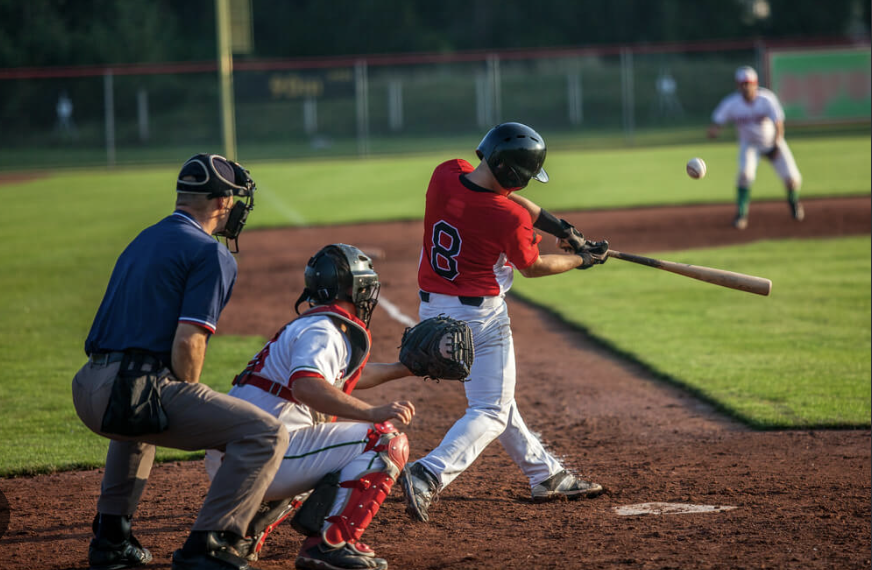
WHY FIELD SIZE MATTERS
One of the most overlooked aspects of player development is the field itself.
Smaller fields can create more offense and higher-scoring games.
However, they do not always prepare players for the next level.
High school baseball requires:
Longer throws
Greater arm strength
Better footwork
Increased throwing endurance
More defensive range
Players benefit from gradually adapting to these challenges before they arrive in high school.
This is one reason Marin Baseball values opportunities to train and play on high school fields.
The dimensions matter.
The game plays differently.
The preparation matters.
A SPECIAL NOTE FOR 7TH GRADE PLAYERS
Because of baseball age cutoffs, some players entering 7th grade may still qualify as league-age 12 players.
While age eligibility is important, developmental readiness is often more important.
Players entering middle school should strongly consider beginning their transition toward larger fields, longer throws, and the level of competition they will soon experience in high school baseball.
Whenever appropriate, participating alongside classmates and future high school teammates can be beneficial for both development and confidence.
Every player develops differently, but grade level should always be part of the conversation

TRAVEL BASEBALL VS. LITTLE LEAGUE INTERMEDIATE / JUNIORS
One of the most common questions families ask is:
"Should my player continue in Intermediate (50/70) or Juniors, or transition to travel baseball?"
There is no universal answer.
The better question is:
Which environment is providing the best developmental opportunities?
Families should evaluate:
Field dimensions
Quality of instruction
Quality of competition
Defensive opportunities
Throwing demands
Baseball IQ development
High school preparation
As players approach high school, larger fields become increasingly important.
The longer throws matter.
The larger defensive spaces matter.
The pitching distances matter.
The game begins to look much more like the baseball players will encounter in high school.
The goal should always be finding the environment that best prepares players for the next stage.
THE LONG GAME: UNDERSTANDING THE COLLEGE BASEBALL PATHWAY
One of the most common questions families ask is:
"What does it take to play college baseball?"
The answer is both simple and complicated.
There is no single path.
There is no perfect showcase.
There is no travel team, recruiting service, social media account, or tournament that guarantees a college opportunity.
For most players, the journey to college baseball is built over many years through consistent development, strong academics, quality coaching, and a genuine love for the game.
The players who ultimately play college baseball rarely get there because of one event.
They get there because they continue improving year after year.
-
Before worrying about recruiting, families should ask a more important question:
What kind of college experience is my player looking for?
College baseball opportunities exist at many levels, including:
NCAA Division I
NCAA Division II
NCAA Division III
NAIA
Junior College (JUCO)
Community College
Many outstanding baseball opportunities exist outside of Division I.
The right fit academically, athletically, socially, and financially is often more important than the logo on the jersey.
-
Many parents are surprised to learn that most college coaches spend the majority of their recruiting time evaluating high school-aged players.
While exceptional athletes may attract attention earlier, meaningful recruiting generally takes place during a player's high school years.
For younger players, the best recruiting strategy is simple:
Focus on becoming a better player.
College coaches cannot recruit potential.
They recruit developed players.
*For baseball and many NCAA Division I sports, coaches generally cannot begin certain recruiting communications until June 15 after a player's sophomore year or September 1 of junior year, depending on the specific sport and type of contact. (resource: NCSA)
-
Not necessarily.
Good players are found in many different programs.
However, families should understand that some organizations have established relationships, recruiting experience, and a track record of helping players navigate the recruiting process.
When evaluating a travel organization, parents should ask:
Have players from this program gone on to play college baseball?
What colleges have recruited players from this organization?
Does the organization provide recruiting guidance?
Does the coaching staff have experience helping players through the process?
The answers can provide valuable insight.
-
Absolutely.
Parents should pay attention to the developmental track record of both travel and high school programs.
Questions worth asking include:
Are players improving over time?
Are players moving on to play college baseball?
Do coaches communicate with college programs?
Is player development prioritized?
The strongest programs often have a history of helping players reach the next level.
-
Showcases can be valuable.
They can also be expensive.
The key is understanding when they make sense.
A showcase should never replace development.
For younger players, showcases often have limited value.
For older high school players who have developed the necessary skills and physical tools, showcases can provide opportunities to be evaluated by college coaches.
Before attending any showcase, families should ask:
Which colleges will actually be attending?
Is my player currently recruitable at that level?
Does the event fit my player's goals?
Is there a realistic opportunity to be seen?
The best showcase is one where the right coaches are present and your player is prepared to compete
-
Sometimes.
Sometimes not.
Families should be cautious about assuming that every invitation or travel opportunity automatically creates recruiting value.
A good question to ask is:
Who is attending and why?
If college coaches are actively recruiting at an event and your player is at an appropriate age and skill level, the opportunity may have value.
If the event is primarily designed to generate social media exposure, rankings, or participation fees, the value may be more limited.
The event itself is rarely what earns a college opportunity.
The player's ability usually does.
-
Baseball can help open doors.
Academics help keep them open.
Strong grades create more opportunities and provide coaches with confidence that a player can handle the demands of college.
Families should encourage players to:
Take school seriously
Develop strong study habits
Challenge themselves academically
Build good time-management skills
Many college coaches evaluate the student before they evaluate the athlete.
-
College coaches are recruiting people, not just players.
Many coaches value:
Leadership experience
Community involvement
Volunteer work
Employment experience
Club participation
Character references
These experiences help players stand out and demonstrate maturity, responsibility, and commitment.
-
There is no need for a 10-year-old to be planning college visits.
As players enter high school, however, visiting campuses can become extremely valuable.
Visits help players understand:
Campus size
Academic offerings
Team culture
Geographic location
Student life
The recruiting process is ultimately about finding the right fit.
The baseball program is important, but it is only one part of the college experience.
-
While every coach is different, most are evaluating some combination of:
Athletic Ability
Can the player run, move, and compete?
Baseball Skills
Can the player consistently perform at a high level?
Coachability
Does the player respond to instruction?
Competitiveness
Does the player compete when challenged?
Character
Will the player positively impact the team culture?
Academics
Can the player succeed in the classroom?
Consistency
Can the player be trusted day after day?
-
A little perspective can be helpful.
Thousands of youth players dream of playing college baseball.
Only a small percentage ultimately do.
An even smaller percentage advance to professional baseball.
These numbers should not discourage players.
They should encourage families to focus on what matters most:
Development.
The goal is not to chase recruiting.
The goal is to become the type of player colleges want to recruit.
The players who continue advancing are usually the players who stay patient, continue learning, embrace coaching, and commit to improving over time.
The path to college baseball is rarely defined by a single moment.
It is built through years of consistent work, strong habits, and a commitment to getting a little better every day.
BASEBALL BY THE NUMBERS
A little perspective can be helpful.
Approximately:
Less than 10% of high school baseball players continue to play college baseball.
Only a small percentage compete at the NCAA Division I level.
A very small percentage are drafted professionally.
Only a fraction of professional players reach Major League Baseball.
These numbers are not intended to discourage dreams.
They are intended to encourage perspective.
Dream big · Work hard · Focus on development.

QUESTIONS EVERY PARENT SHOULD ASK BEFORE JOINING A TEAM
How are pitch counts tracked?
How is arm health prioritized?
How often do coaches communicate with families?
What is the development philosophy?
How many positions will players learn?
How are teams selected?
How much practice occurs versus games?
How are players prepared for the next level?
How is success measured?
The answers will tell you a lot about an organization and whether it is the right fit for you and your player.
CHARACTER, ACCOUNTABILITY & LIFE SKILLS
At Marin Baseball, we believe baseball is about much more than batting averages, pitching velocity, or wins and losses.
The lessons players learn through sports often have a greater impact on their future than the game itself.
Responsibility · Accountability · Respect ·Communication · Preparation · Gratitude.
These qualities help players succeed not only in baseball, but in school, future careers, and life.
-
As players grow older, we encourage them to take increasing ownership of their baseball experience.
This includes:
Packing their own equipment
Bringing their own water
Arriving prepared
Managing their schedule
Taking responsibility for mistakes
Learning from setbacks
One of the most important signs of maturity is when players begin taking ownership rather than relying on others to manage everything for them.
Mistakes happen.
Every player forgets something at some point.
The goal is not perfection.
The goal is learning accountability.
We encourage players to avoid blaming parents, teammates, coaches, or circumstances for things they can control. Whether it's forgetting a glove, leaving equipment behind, or failing to prepare, ownership is an important part of growth.
-
As players move toward high school and eventually college, communication becomes increasingly important.
We encourage players to begin communicating directly with coaches whenever age-appropriate.
This may include:
Responding to messages
Confirming attendance
Asking questions
Communicating schedule conflicts
Expressing appreciation
Even a simple response such as:
"Received. Thank you, Coach."
demonstrates responsibility and maturity.
As players get older, coaches increasingly expect to hear from the player, not just the parent.
Learning professional communication skills is part of becoming a responsible young adult
-
How a player treats their parents, teammates, coaches, opponents, and officials says a great deal about their character.
We encourage players to:
Use good manners
Show appreciation
Speak respectfully
Demonstrate gratitude
Take responsibility for their actions
Parents invest tremendous amounts of time, energy, and resources supporting their children.
They drive to practices and games.
They help coordinate schedules.
They make sacrifices so players can pursue their goals.
A simple "please" and "thank you" go a long way.
Players should avoid demanding that parents carry equipment, retrieve water bottles, solve forgotten responsibilities, or take ownership of tasks that belong to the player.
Accountability builds trust.
Excuses create barriers to growth.
-
Baseball is the ultimate team sport.
Players are expected to support and respect their teammates regardless of role, playing time, or performance.
We also believe in teaching players how to properly engage with coaches.
Simple habits matter:
Make eye contact
Listen when someone is speaking
Be attentive during instruction
Respond respectfully
Thank coaches for their time and effort
At Marin Baseball, we encourage players to greet coaches when they arrive and acknowledge them when they leave.
A simple:
"Good afternoon, Coach."
or
"Thank you, Coach. See you next practice."
demonstrates maturity, respect, and appreciation.
Whether it's a handshake, fist bump, or verbal greeting, these habits create positive relationships and demonstrate professionalism.
These actions may seem small, but they leave lasting impressions.
-
One of the greatest lessons baseball teaches is how to respond when things do not go as planned.
Every player will make mistakes.
Every player will fail.
Every player will face challenges.
The players who continue improving are not the players who avoid mistakes.
They are the players who learn from them.
When receiving coaching or feedback, we encourage players to:
Listen first
Avoid making excuses
Ask questions when needed
Make adjustments
Move forward positively
A response such as:
"Yes, Coach."
or
"I'll work on that."
demonstrates far more maturity than explaining why something went wrong.
The best players are often the most coachable players.
-
Many families assume coaches are only evaluating athletic ability.
The reality is that coaches are evaluating the entire person.
Long before a player earns a roster spot, a starting position, or a recruiting conversation, coaches are often observing behaviors that have nothing to do with baseball skills.
They notice:
How players respond to coaching
How players interact with teammates
How players treat their parents
How players handle adversity
How players communicate
How players prepare
How players carry themselves on and off the field
Coaches pay attention to whether a player:
Arrives on time
Takes responsibility for mistakes
Maintains a positive attitude
Responds respectfully
Demonstrates leadership
Shows appreciation
Handles failure with maturity
In many cases, two players may have similar athletic ability.
The player who demonstrates greater maturity, coachability, accountability, and character often earns the opportunity.
At the high school level, coaches are building a culture.
At the college level, coaches are investing roster spots, scholarship dollars, travel budgets, and years of development into young adults.
They want players they can trust.
They want players who are accountable.
They want players who represent their program well.
The habits players develop at 10, 12, and 14 years old often become the same habits coaches evaluate years later.
Character may not appear on a stat sheet, but it often influences opportunities just as much as talent.
The Bigger Picture
Our goal is not simply to develop better baseball players.
Our goal is to help develop confident, responsible, respectful young people.
Years from now, very few people will remember a batting average, tournament championship, or showcase result.
Coaches, teammates, future employers, and the people around them will remember character, work ethic, accountability, and how a player treated others.
Those lessons often create opportunities long after the final game is played.
Baseball is a vehicle for teaching life lessons.
The game eventually ends for every player.
The character they build along the way lasts forever.